What is a Ureterorenoscope? Simple Explanation
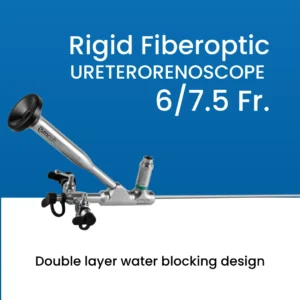
A ureterorenoscope is a long, thin tube with a tiny light and camera at the end. Doctors pass this tube through the natural opening of the body — through the urethra and bladder — and into the ureter and kidney. The ureter is the narrow tube that connects your kidney to your bladder. A ureterorenoscope lets doctors see directly inside this tube and the kidney without surgery.
The word ‘ureterorenoscope‘ comes from three parts: ‘uretero’ (ureter), ‘reno’ (kidney), and ‘scope’ (to look). So it simply means a device to look inside the ureter and kidney. You may also hear the shorter word ‘ureteroscope,’ which means the same thing.
These advanced tools are used every day in hospitals and clinics around the world. They help doctors diagnose and treat problems quickly and safely. Patients recover much faster compared to open surgery because there are no cuts or stitches needed.
Key Facts About the Ureterorenoscope
- Works through the body’s natural openings — no cuts needed
- Has a tiny camera, light, and a working channel for tools
- Used to treat kidney stones, tumors, and strictures
- Available in flexible and semi-rigid designs
- High-performance single-use and reusable models are available
5 Types of Ureterorenoscope Explained
There are 5 main types of ureterorenoscope used in ureteroscopy today. Each type has special features that make it the right choice for different situations. Let us look at all 5 types in simple terms.
1. Flexible Ureterorenoscope (Used in RIRS)
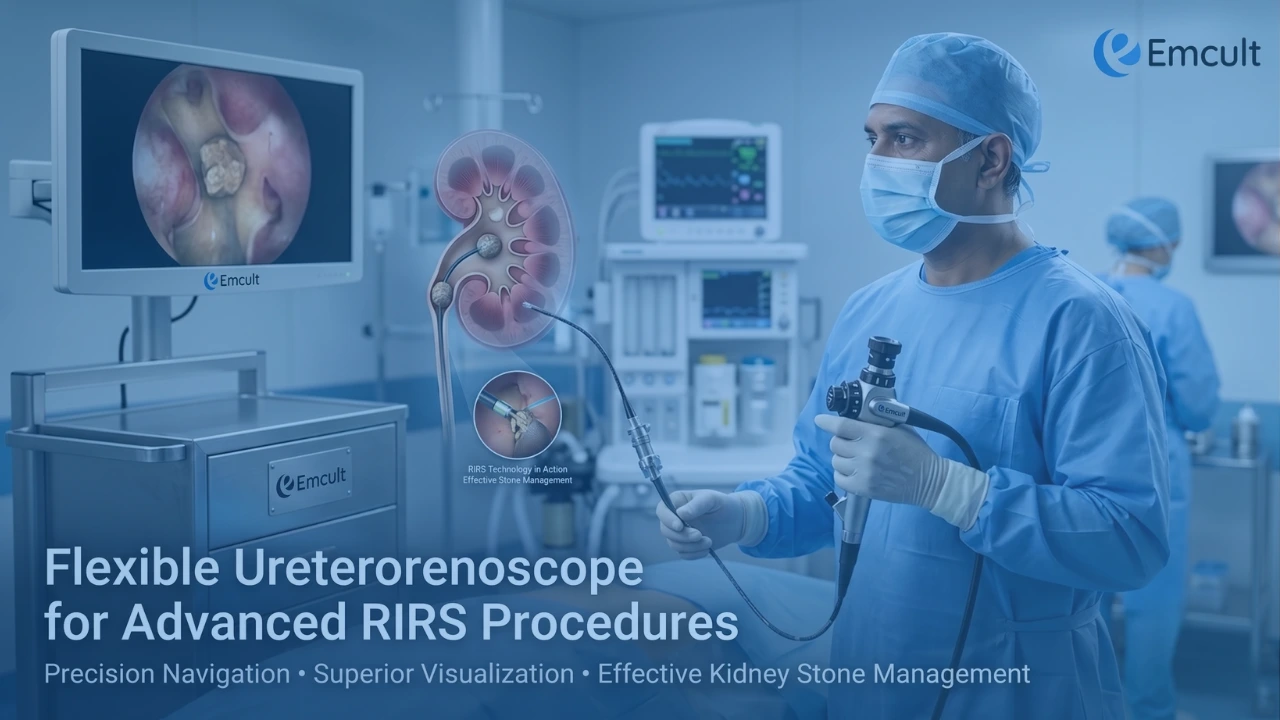
The flexible ureterorenoscope is the most widely used advanced ureteroscope today. Its soft, bendable tip can turn in many directions — up to 270 degrees. This makes it easy to reach every corner of the kidney, including hard-to-reach areas like the lower pole calyx.
This type is the key tool used in Retrograde Intrarenal Surgery (RIRS). RIRS is a high-performance technique where doctors enter the kidney from below — through the ureter — without any cuts. Flexible ureterorenoscopes (RIRS) are the gold standard for treating kidney stones smaller than 2 cm and for diagnosing upper urinary tract cancer.
Benefits of Flexible Ureterorenoscopes (RIRS)
- Can reach all parts of the kidney including the lower pole
- Minimal trauma to the ureter and kidney lining
- Used with holmium laser for stone dusting and fragmentation
- Shorter hospital stay — most patients go home same day
- High stone-free rates for stones under 2 cm
2. Semi-Rigid Ureteroscope
The semi-rigid ureteroscope is slightly stiff but has a small amount of flexibility. It is a strong and reliable tool used mainly for treating stones and problems in the lower and mid ureter. Because it has a larger working channel than flexible scopes, it allows better water flow and makes it easier to use instruments during the procedure.
Semi-rigid ureteroscopes are simple to use and are often the first choice for urologists treating stones stuck in the lower ureter. They are also great for dilating (widening) narrow areas of the ureter called strictures.
Image ALT text suggestion: Semi-rigid ureteroscope for ureteral stone treatment — advanced ureteroscopy instrument with large working channel
Benefits of Semi-Rigid Ureteroscopes
- Strong and durable design — handles tough procedures well
- Larger working channel allows better tool access
- Best for lower and mid-ureteral stones
- Easier irrigation (water flow) during ureteroscopy
- Less expensive than flexible ureteroscopes
3. Single-Use (Disposable) Ureterorenoscope
Single-use ureterorenoscopes are used just once and then safely thrown away. These advanced scopes have become very popular in recent years because they remove the risk of infection from reusing a scope that has not been cleaned perfectly. Every patient gets a brand-new scope, which means zero risk of cross-contamination.
Modern single-use ureteroscopes now offer optics (image quality) that are almost as good as reusable scopes. They are a great choice for hospitals that want to keep infection rates as low as possible.
Benefits of Single-Use Ureteroscopes
- Zero risk of infection from reprocessing
- No repair or maintenance costs
- Always performs at peak level — no wear and tear
- Ideal for high-risk patients and complex cases
- Ready to use immediately — no sterilization wait time
4. Reusable Ureterorenoscope
Reusable ureterorenoscopes are cleaned, sterilized, and used again for many patients over time. These high-performance scopes offer the best image quality and the widest range of movement. Top brands like Karl Storz, Olympus, and Stryker make reusable ureteroscopes that can last for hundreds of cases when properly maintained.
While the upfront ureterorenoscope price for reusable models is higher, the cost per case goes down significantly over time. This makes them a smart investment for busy urology centers that perform many ureteroscopy procedures each week.
Benefits of Reusable Ureteroscopes
- Best image quality and deflection performance
- Lower cost per procedure when used many times
- Wide range of sizes and designs available
- Familiar feel and handling for experienced surgeons
- Compatible with the latest laser and irrigation systems
5. Digital Ureterorenoscope (Chip-on-Tip)
Digital ureterorenoscopes use a tiny digital chip placed at the very tip of the scope. This chip-on-tip technology sends a clear, sharp digital image directly to a high-definition monitor. Traditional scopes use fiber optic bundles to carry the image, which can sometimes reduce clarity. Digital scopes remove this problem completely.
These are the most advanced ureterorenoscopes currently available. The image quality is outstanding, helping doctors see even tiny stones and lesions with great detail. Digital ureteroscopes are quickly becoming the preferred choice in high-performance urology centers worldwide.
Ureterorenoscope Comparison Table
Use this simple table to compare all 5 types of ureterorenoscope at a glance:
Type | Best For | Deflection | Image Quality | Infection Risk | Cost Level |
Flexible (RIRS) | Kidney stones, renal tumors | Up to 270° | Excellent | Low–Medium | High |
Semi-Rigid | Lower/mid ureteral stones | None | Good | Medium | Medium |
Single-Use | Infection control priority | Up to 270° | Good–Excellent | Very Low | Medium/case |
Reusable | High-volume urology centers | Up to 270° | Best in class | Low (if reprocessed correctly) | High upfront, low/case |
Digital (Chip-on-tip) | Complex cases, tumor biopsy | Up to 270° | Outstanding HD | Low | Very High |
Ureterorenoscope Price: How Much Does It Cost?
The ureterorenoscope price varies widely based on the type, brand, and features. Here is a simple breakdown of typical ureterorenoscope prices in 2024–2025:
Scope Type | Approximate Price Range (USD) | Notes |
Semi-Rigid Ureteroscope | $3,000 – $8,000 | Entry-level reusable option |
Flexible Ureterorenoscope (Reusable) | $8,000 – $25,000 | Price varies by brand and optics |
Single-Use Flexible Ureteroscope | $250 – $600 per unit | No maintenance cost |
Digital Chip-on-Tip Ureteroscope | $15,000 – $40,000+ | Top-tier image quality |
Ureteral Access Sheath (add-on) | $80 – $200 per unit | Used alongside the scope |
The ureterorenoscope price also depends on the country and the vendor. In India, for example, reusable flexible ureteroscopes from reputable brands often range between INR 5,00,000 to INR 18,00,000. Single-use ureteroscopes are widely available at INR 20,000 to INR 50,000 per unit.
Always ask your supplier about service contracts, warranty, and repair costs when evaluating the total ureterorenoscope price. For hospitals in India and South Asia, several international brands offer localized pricing and support.
Factors That Affect Ureterorenoscope Price
- Brand reputation (Karl Storz, Olympus, Stryker, WOLF, Pusen)
- Image technology: fiber optic vs digital chip-on-tip
- Deflection range and working channel diameter
- Single-use vs reusable design
- Country of purchase and local distributor pricing
- Warranty length and after-sales service package
What Is a Ureteroscopy Procedure?
Ureteroscopy is the medical procedure where a ureteroscope or ureterorenoscope is used to look inside and treat the ureter and kidney. It is a safe, effective, and common procedure for treating kidney stones and other upper urinary tract problems.
Ureteroscopy is done under general or spinal anesthesia. The patient lies on their back on a special table. The doctor passes the scope through the urethra, then into the bladder, and then up into the ureter and kidney. No cuts are made on the outside of the body.
Step-by-Step Ureteroscopy Procedure
- Step 1 — Preparation: Blood tests, urine culture, and a CT scan are done before the procedure to plan the best approach.
- Step 2 — Anesthesia: General or spinal anesthesia is given so the patient feels no pain.
- Step 3 — Guidewire placement: A thin wire is passed through the ureter using a cystoscope and X-ray guidance.
- Step 4 — Scope insertion: The ureterorenoscope is advanced over the guidewire into the ureter and kidney.
- Step 5 — Diagnosis and treatment: The doctor views the inside of the ureter and kidney on a monitor. Stones are broken up with a laser. Tissue samples (biopsies) can be taken if needed.
- Step 6 — Stent placement: A small JJ stent (double J stent) is often left in the ureter for a few weeks to help healing and urine flow.
- Step 7 — Recovery: Most patients go home the same day or the next morning.
How Long Does Ureteroscopy Take?
A ureteroscopy procedure usually takes between 30 minutes and 90 minutes, depending on the size and location of the stone or problem. Complex cases — such as multiple stones in the kidney — may take a little longer.
Is Ureteroscopy Safe?
Yes, ureteroscopy is a very safe procedure when performed by a trained urologist. Serious complications are rare. The most common minor issues include:
- Blood in the urine for 1–3 days after the procedure
- Mild pain or burning when urinating
- Discomfort from the ureteral stent
- Low risk of urinary tract infection (treated with antibiotics)
Serious problems like ureteral injury or urosepsis (severe infection) happen in less than 2% of cases and are managed quickly by the medical team.
Flexible Ureterorenoscopes (RIRS): Advanced Kidney Stone Treatment
Retrograde Intrarenal Surgery (RIRS) is one of the most advanced and high-performance techniques for treating kidney stones. RIRS uses a flexible ureterorenoscope to reach all parts of the kidney — including the difficult lower pole — without any cuts or punctures.
During RIRS, the flexible ureterorenoscope is passed all the way into the renal collecting system (the inside of the kidney). A holmium laser fiber is then passed through the working channel of the scope to break up stones into tiny dust-like particles that the body can pass naturally in the urine.
When Are Flexible Ureterorenoscopes (RIRS) Used?
- Kidney stones between 1 cm and 2 cm
- Stones in hard-to-reach lower pole calyces
- Patients who cannot have ESWL (shock wave therapy)
- Diagnosis and biopsy of upper tract tumors
- Patients who have bleeding disorders or blood thinners
- Stones in transplanted or single kidneys
RIRS vs PCNL vs ESWL: Which Is Better?
Feature | RIRS (Flexible URS) | PCNL | ESWL |
Stone size | Up to 2 cm (ideal) | 2 cm and above | Up to 1.5 cm |
Cuts needed | None | Small hole in back | None |
Hospital stay | Same day / 1 day | 2–4 days | Outpatient |
Stone-free rate | Very high (85–95%) | Highest (>95%) | Moderate (70–80%) |
Anesthesia | General or spinal | General | None or light sedation |
Recovery time | 2–5 days | 5–10 days | 1–2 days |
Semi-Rigid Ureteroscopes: Reliable Performance for Ureteral Stones
Semi-rigid ureteroscopes remain one of the most trusted tools in urology. Even with the growing popularity of flexible ureterorenoscopes, semi-rigid scopes continue to be the first choice for treating stones in the distal (lower) and mid ureter. Their strong, straight body allows better control and larger instruments to pass through the working channel.
These scopes are also commonly used for ureteral dilation — widening a narrow area of the ureter — before passing a flexible ureterorenoscope into the kidney. Many urologists start with a semi-rigid scope to gain access and then switch to a flexible scope for the renal (kidney) part of the procedure.
Typical Uses of Semi-Rigid Ureteroscopes
- Distal ureteral stones (stones in the lower third of the ureter)
- Mid-ureteral stones
- Ureteral stricture dilation and treatment
- Placement of ureteral stents
- First-pass access before using a flexible ureteroscope
How to Choose the Right Ureterorenoscope
Choosing the right ureterorenoscope depends on several factors. Both patients and doctors should think about the following points:
For Doctors and Hospitals
- Stone location: Use a flexible ureterorenoscope (RIRS) for kidney stones; use a semi-rigid ureteroscope for lower ureteral stones.
- Stone size: Stones under 2 cm are best treated with RIRS; larger stones may need PCNL.
- Patient risk: Single-use scopes reduce infection risk for high-risk patients.
- Volume of cases: Reusable scopes are more cost-effective for high-volume centers.
- Budget: Consider the full ureterorenoscope price including repair, sterilization, and replacement costs.
For Patients
- Ask your doctor: Which type of ureteroscope will be used for your procedure?
- Ask about RIRS: Is a flexible ureterorenoscope appropriate for your stone size and location?
- Infection control: Is the hospital using single-use or properly sterilized reusable scopes?
- Recovery time: Ureteroscopy usually means going home the same day or the next morning.
Top Ureterorenoscope Brands in the World
Several companies make high-performance ureterorenoscopes trusted by urologists worldwide. Here are the top brands:
Brand | Country | Known For | Popular Models |
Karl Storz | Germany | Best optics and durability | FLEX-X2, FLEX-XC |
Olympus | Japan | Digital chip-on-tip technology | URF-V3, URF-P7 |
Stryker | USA | Single-use innovation | Flex Vision, Flexor |
Richard Wolf | Germany | High deflection angles | Cobra Vision |
Pusen | China | Affordable high-performance scopes | URF8.0A |
Boston Scientific | USA | LithoVue single-use leader | LithoVue Elite |
How to Care for a Reusable Ureterorenoscope
Proper care of a reusable ureterorenoscope is very important. These are high-performance, delicate instruments that must be handled carefully. Poor maintenance is the main cause of scope damage and repair costs.
Ureterorenoscope Care Steps
- Rinse the scope with clean water immediately after use
- Leak test the scope before every sterilization cycle
- Use only approved enzyme cleaners for manual cleaning
- Follow the manufacturer’s reprocessing guidelines exactly
- Store the scope hanging vertically or in a padded case
- Never use excessive force when deflecting the tip
- Inspect the working channel and optics before each procedure
Common Reasons for Ureterorenoscope Repair
- Broken deflection wire from overuse or improper handling
- Damaged working channel from sharp instruments
- Cracked outer sheath from accidental bending
- Deteriorated optics from failed sterilization cycles
Repair costs for high-performance reusable scopes can range from $500 to $5,000+ depending on the damage. This is why many busy hospitals are now choosing single-use ureterorenoscopes.
Internal and External Links Reference
Suggested Internal Links (add to your website)
- Link to: /kidney-stone-treatment — anchor text: ‘kidney stone treatment options’
- Link to: /holmium-laser — anchor text: ‘holmium laser for ureteroscopy’
- Link to: /ureteral-stent — anchor text: ‘ureteral JJ stent placement’
- Link to: /pcnl — anchor text: ‘PCNL vs ureteroscopy comparison’
- Link to: /urology-products — anchor text: ‘advanced urology instruments’
Suggested External DoFollow Links
- https://www.auanet.org — American Urological Association (AUA) ureteroscopy guidelines
- https://www.uroweb.org — European Association of Urology (EAU) urolithiasis guidelines
- https://pubmed.ncbi.nlm.nih.gov — PubMed studies on ureteroscopy outcomes
- https://www.ncbi.nlm.nih.gov/books/NBK538310/ — NCBI overview of ureteroscopy