

Description
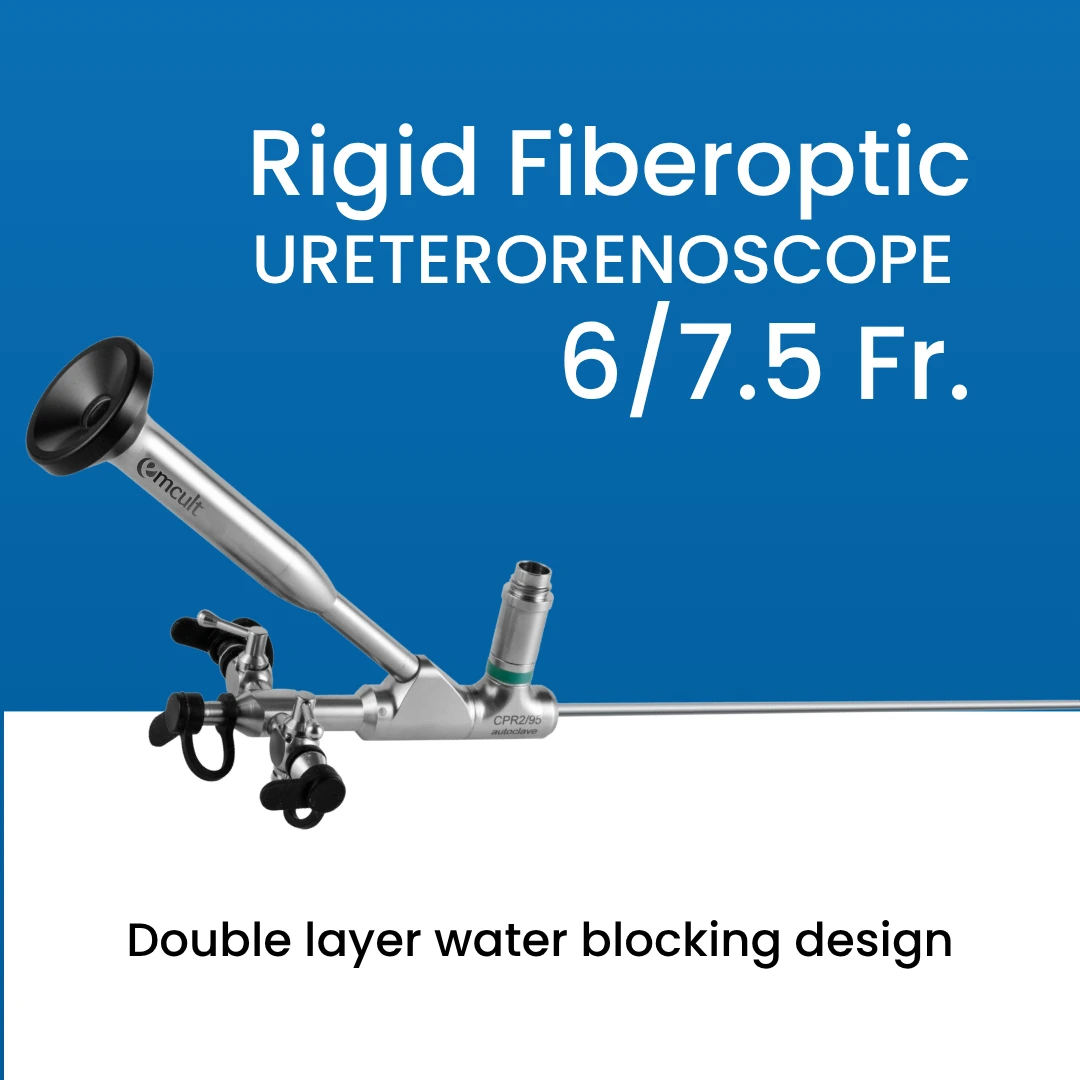
Rigid Ureterorenoscope 6/7.5 Fr.
A ureterorenoscope is a long, thin tool with a tiny lens that lets doctors see deep inside the body without making a cut. The Ureterorenoscope 6/7.5 Fr. is a rigid fiberoptic model made for ureteroscopy — the medical procedure used to find and treat problems in the ureter and kidney. This advanced scope is one of the most trusted tools used by urologists today.
The word “ureterorenoscope” simply means a scope that looks inside the ureter and the kidney. You may also hear it called a “ureteroscope.” Both words point to the same kind of high-performance medical tool. This 6/7.5 Fr model is a semi-rigid ureteroscope — it has a strong, straight body that does not bend like a flexible scope, but it still allows smooth and safe movement through the ureter.
Doctors use this ureterorenoscope to treat kidney stones, check for tumors, and place stents. It works together with a laser or other tools to break stones into small pieces that the body can pass on its own. Because the scope is autoclavable, it can be cleaned and used again and again — making it a smart and cost-effective choice for busy hospitals.
How the Ureterorenoscope 6/7.5 Fr. Is Used in Ureteroscopy
The ureteroscopy procedure with this advanced ureterorenoscope follows clear, simple steps. Here is what happens during a typical case:
- Patient preparation:The patient receives anesthesia so they feel no pain. Imaging is reviewed to plan the procedure.
- Guidewire placement:A thin wire is guided into the ureter using a cystoscope and X-ray.
- Scope insertion:The Ureterorenoscope 6/7.5 Fr. is passed along the guidewire through the urethra, bladder, and into the ureter.
- Visualization:The 12° telescope sends a clear image to the monitor so the doctor can see the stone or problem area.
- Treatment:A laser fiber or other instrument is passed through the 4 Fr working channel to break up stones or take tissue samples.
- Irrigation:The dual irrigation ports keep the view clear by flushing fluid through the scope during the procedure.
- Stent placement:If needed, a small stent is left in place to help healing after the scope is removed.

Reviews
There are no reviews yet.